
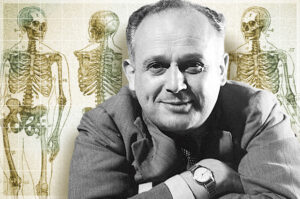
Discover the Feldenkrais® Method
From: Feldenkrais.com
The Feldenkrais Method® of somatic education is a practice, a process, and a system for self-improvement. It is a form of “somatic education,” which means it uses movement and real-time awareness of your own body sensations to guide you toward the positive changes you seek.
The Feldenkrais Method is not a treatment, adjustment, or exercise program. Instead, it is based on decades of research in physics, neuroscience, biomechanics, learning theory, and human development to give you the means to help yourself.
The Feldenkrais Method® of somatic education uses gentle movement and directed attention to help people learn new and more effective ways of living the life they want. You can increase your ease and range of motion, improve your flexibility and coordination, and rediscover your innate capacity for graceful, efficient movement. Since how you move is how you move through life, these improvements will often enhance your thinking, emotional regulation, and problem-solving capabilities.
The Feldenkrais Method is based on principles of physics, biomechanics, and an empirical understanding of learning and human development. Moshe Feldenkrais said, “We move according to our perceived self-image.” By expanding your perception and increasing awareness, you will become more aware of your habits and tensions and develop new ways of moving. By increasing sensitivity, the Feldenkrais Method assists you to live your life more fully, efficiently, and comfortably.
What can the Feldenkrais Method do for me?
The Feldenkrais Method® of somatic education offers a wide range of benefits, as diverse as the individuals who explore the Method. We hope you will find yourself in some of the articles on this website, and can get an idea of how others like you have experienced: whether you are seeking pain relief, dealing with conditions of the central nervous system (multiple sclerosis, cerebral palsy, stroke), or extending your abilities, improving skill, and enhancing creativity.
How does it work?
Your own body awareness and attention stimulates the brain to create new neural pathways that enable optimal movement patterns and function. This brain activity is called “neuroplasticity.” Neuroplasticity is what allows all learning to take place. As you learn better ways to move, you experience improvements in balance, breathing, coordination, flexibility, cognition, and outlook.
The Feldenkrais Method has two unique approaches, group classes which we call Awareness Through Movement®, and private (one to one) lessons which we call Functional Integration®.
Awareness Through Movement®
Feldenkrais® group classes are known as Awareness Through Movement® lessons. Similar to Tai Chi or gentle yoga, Awareness Through Movement classes use slow, mindful movements to achieve powerful effects in terms of strength, flexibility, and holistic integration of body and mind. Unique to the Feldenkrais Method® of somatic education is that these lessons tie directly into functional movements of daily life, such as walking efficiently, safely lifting objects, and improving one’s posture in sitting or standing.
You can expect a class to last somewhere between 30 and 60 minutes. You might walk, stand, or sit in a chair, although usually, you will lie on the floor in a variety of comfortable positions: either on your back, front, or side. The teacher guides students through a sequence of movements, encouraging them to move with gentle attention within a comfortable range. You may become aware of unexpected and interesting connections within and between the movements. As you attend to the improving quality of movement, unnecessary muscular tensions throughout the body can reorganize and release. Students are often amazed at the quick and clear changes that occur through the neuromuscular repatterning that happens in an Awareness Through Movement lesson!
Functional Integration®
Feldenkrais® private sessions are known as Functional Integration® lessons. In Functional Integration, the teacher guides an individual student in movement lessons using gentle, non-invasive touch as the primary means of communication.
In a Functional Integration lesson, the Feldenkrais teacher’s touch reflects to the student how they currently organize their body and actions. They suggest, through gentle touch and movement, expanded possibilities for new movement patterns which are more comfortable, efficient, and useful. Functional Integration lessons are flexible in their approach, determined by the student’s needs. The student may lie comfortably on a table designed specifically for the work, or do some of the lesson sitting or standing. As needed, the teacher may also use various props to support the student’s comfort, to make certain movements easier, or to clarify a movement.
Each Functional Integration lesson relates to a desire, intention, or need of the student. The learning process is carried out without the use of any invasive or forceful procedure. Through rapport and respect for the student’s abilities, qualities, and integrity, the teacher creates an environment in which the student can learn in safety and comfort. The lesson is developed, specifically for the student, custom-tailored to the unique circumstances of that particular person, at that particular moment. The student learns how to reorganize their actions in new and more effective ways through the experience of comfort, enjoyment, and ease of movement.